The end of printing
Eliminating the need for printing return labels
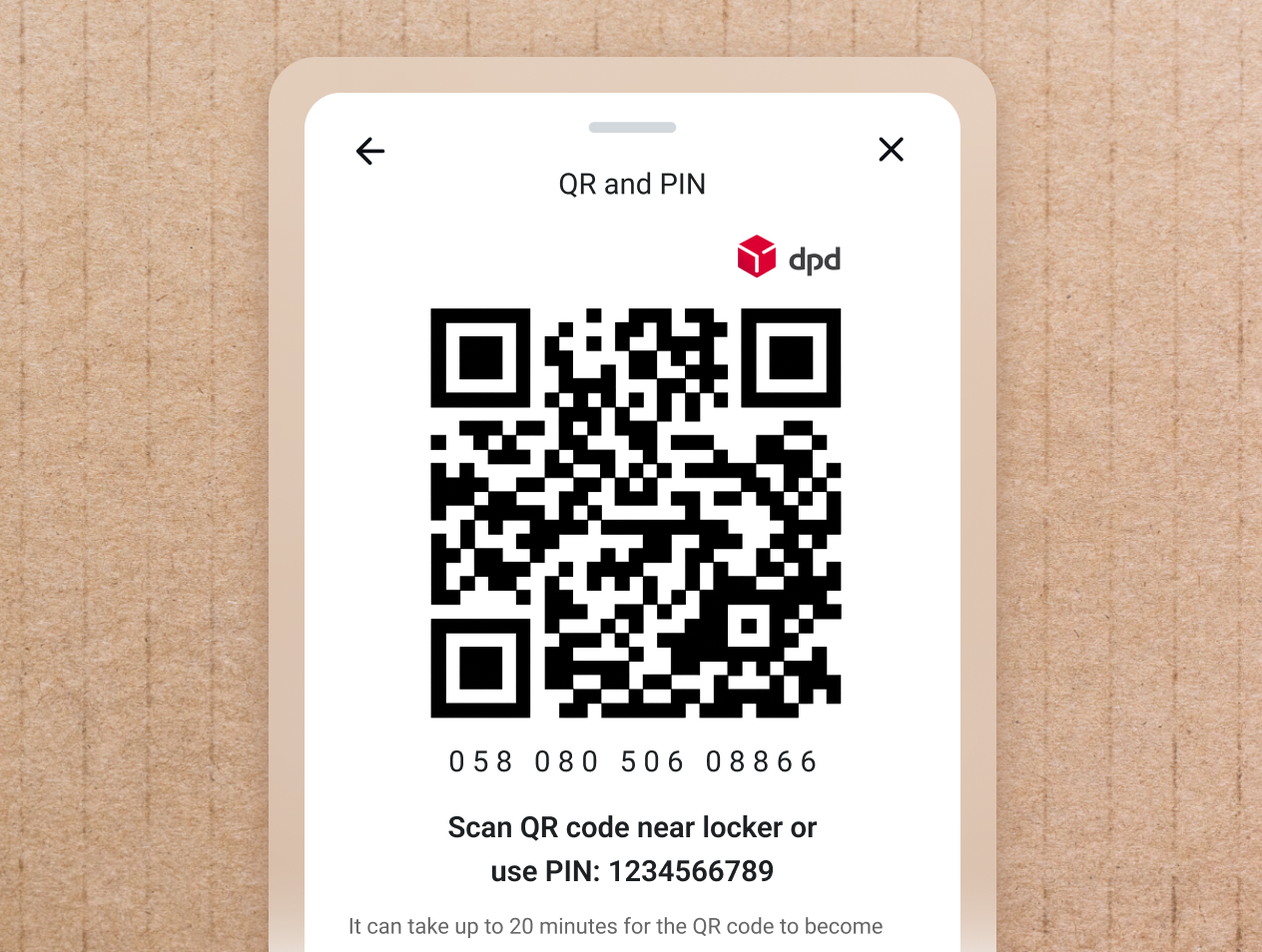
Problem
Nobody has a printer and returns still require one
You know the drill. You want to return something, and the first thing they ask you to do is print a label. Print. A label. In 2025.
You’re lucky if you even have a printer. Then it has to actually work. Have ink. Have paper. For someone like me who doesn’t own a printer, it means finding a print shop, going there, paying for a single page. I’m getting irritated just typing this.
When I looked at Ovoko’s return flow, I realised we were putting buyers through exactly this. Every return required a printed label. I thought: why have we never done printless returns?
Discovery
60% of buyers had no printer at home
I needed more than my own frustration, I needed numbers. I ran a Hotjar survey across our marketplace buyers to understand how widespread the problem was.
The results were clear: the majority of our buyers didn’t have a printer at home. Combined with data from Zigzag Global showing similar patterns across e-commerce, this wasn’t a niche problem, it was the default experience for most of our users.
of buyers reported having no printer at home
Internal Hotjar survey across Ovoko marketplaceof e-commerce buyers industry-wide lack easy printer access
Zigzag Global returns reportOur internal number was even higher than the industry average, printing a return label was a real barrier for the majority of our users.
The QR data was already in the API – nobody had used it
The PM wasn’t buying it at first. "Too many unknowns," he said. Fair enough, but I did my own research anyway.
I dug into the DPD API documentation and discovered that every return shipment already passed QR code and PIN code values. The data for a fully digital label had been sitting in the API all along. Nobody had ever surfaced it to the user.
Once I showed the PM that the building blocks were already there, he started coming around. We agreed I could experiment with it during the next Autonomy Days, Ovoko’s quarterly hackathon.
Build (3-day hackathon)
Scoped, staffed, and shipped in 3 days
Id never formally worn the Product Manager hat before, but this hackathon was my chance to own the whole thing end-to-end: scoping, team assembly, and delivery.
I pitched the idea to a frontend and backend developer from the shipping team. They were in. I set up a Trello board for visibility, onboarded the team on what we were building and why, and defined a clear goal:
A beta version of printless returns for DPD locker returns in Lithuania, using QR and PIN codes.
We focused on mobile since our traffic there was 2× desktop. And we kept the printed label as a fallback — in case something unexpected happened on the carrier side.
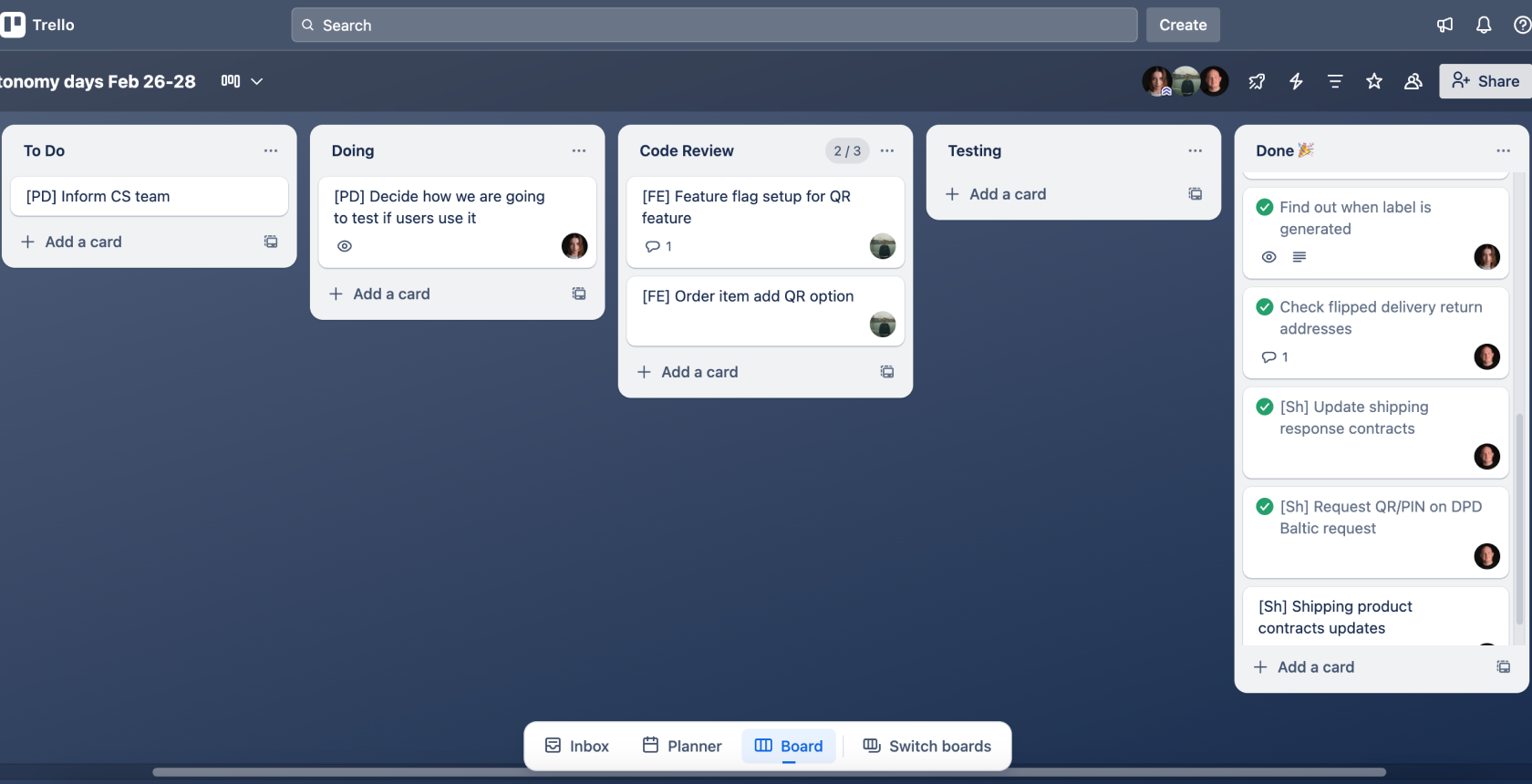
And it worked! But pretty soon we knew we’d f*cked up 😅
Before asking any users to try it, we tested on ourselves. I’d ordered a CD player from Ovoko a few days earlier (yes, a Mercedes-Benz CD player for my BMW, long story). The shipping QA specialist sent me a QR code generated from the backend.
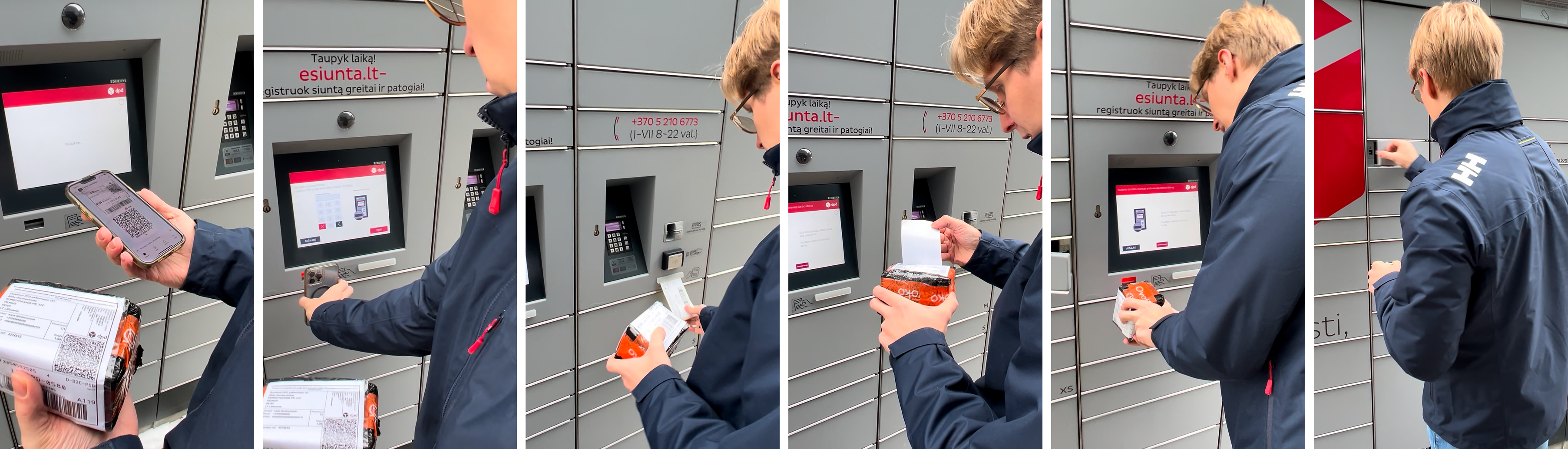
I gave my fiancé the mission: take the parcel to a DPD locker, scan the QR, and drop it off. I filmed the whole thing. It worked perfectly.
Until the next day, when a DPD courier called asking where to send the parcel because we’d accidentally swapped the sender and receiver addresses in the backend. The parcel was addressed to the locker itself. We fixed the address mapping and moved on. That’s hackathon life.
Solution
One QR, no scissors, no paper, no printer
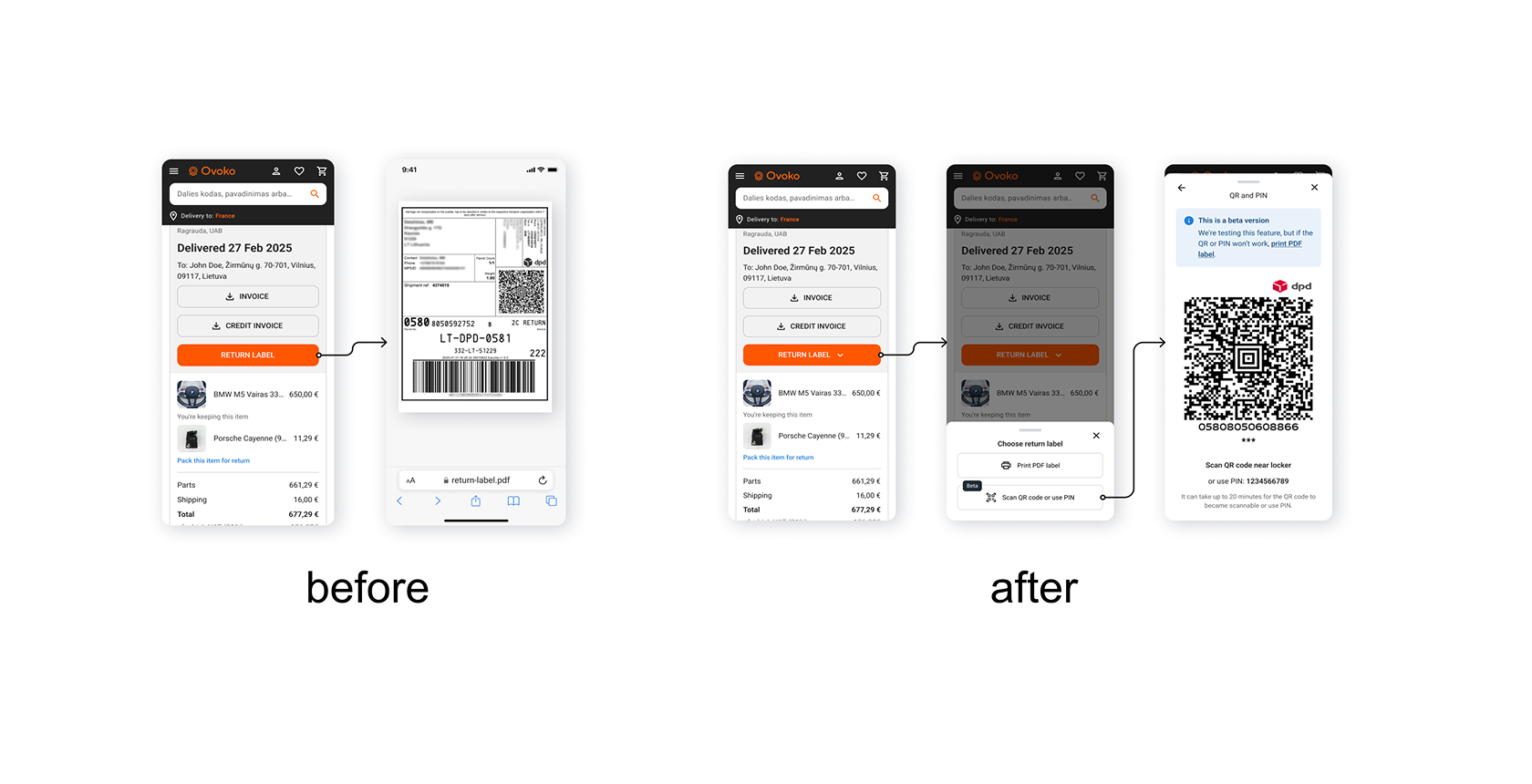
The final flow is simple: the buyer opens their return, taps "Return label," and sees a QR code on their phone screen. They walk to a DPD locker, scan the QR, put the parcel in, and they’re done.
No printing. No scissors. No duct tape over a label. Just a phone and a box.
We designed mobile-first and kept the printed label option visible as a fallback but the digital path is now the default and the primary visual.
Impact
Live in production, measuring adoption through locker events
This shipped during a 3-day hackathon and it’s still live today. Printless returns are available in our marketplace for DPD locker returns across the Baltics.
Measuring direct adoption required some creative thinking: DPD doesn’t send us an event confirming whether the digital label was scanned at the locker. But we do receive a "parcel inserted" event, and we can match that against the timestamp of when the buyer opened the QR modal in our UI. If those events correlate closely, the buyer used the digital label.
Beyond the metric, the team presentation got a standing ovation. The PM who initially pushed back became one of the project’s biggest advocates. And the feature opened the door for expanding printless returns to other carriers and markets.